


23-11-2026
Bringing together environmental responsibility, scientific excellence and social inclusion, the congress demonstrates how sustainability can shape every aspect of a major scientific event.
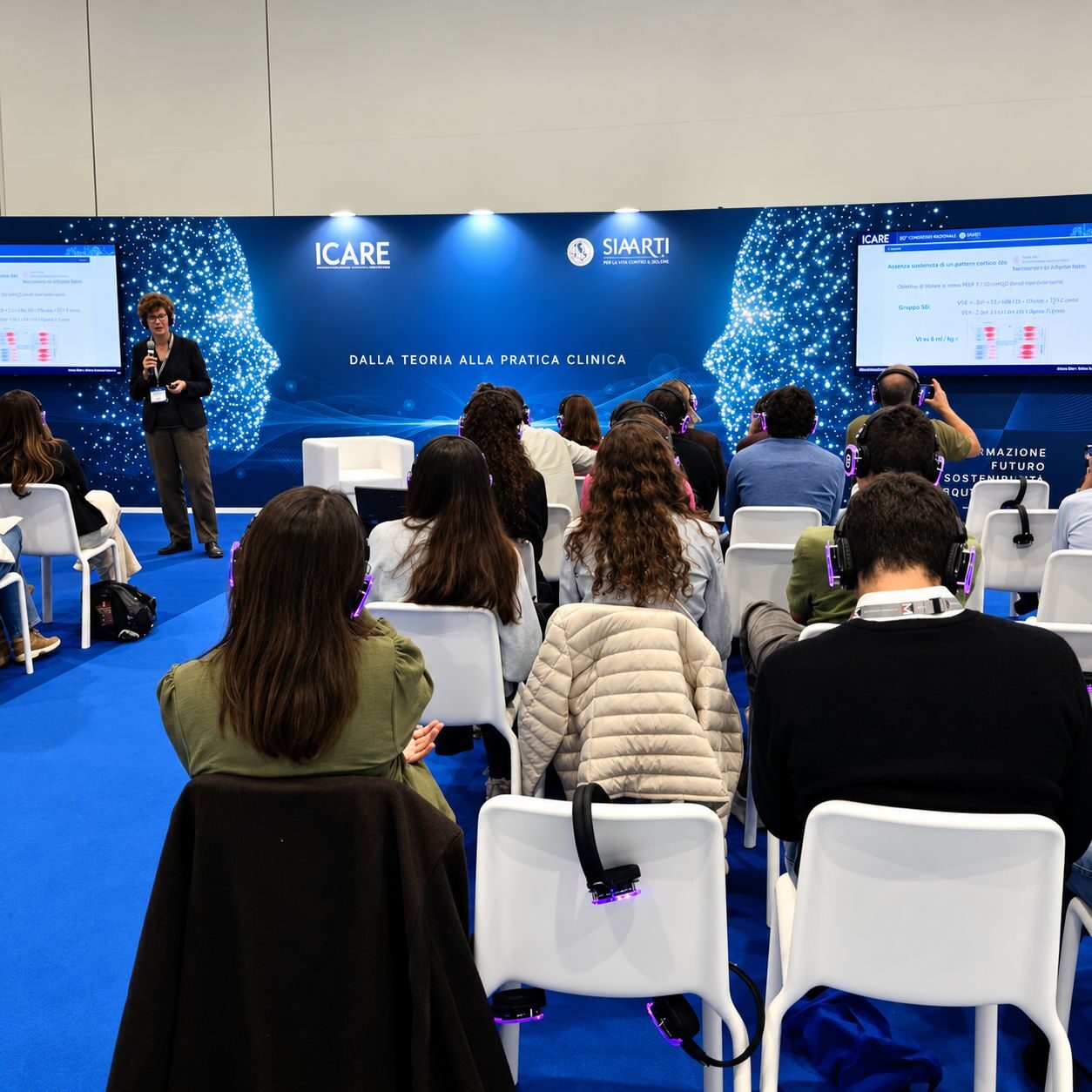
What does it take to make a congress truly sustainable? At SIAARTI ICARE 2026, the answer went far beyond reducing paper or managing waste. Sustainability became a guiding principle shaping the entire congress experience: from how people travelled and interacted with the event to the scientific topics discussed and the social value generated.
Held from 22 to 24 October 2026 at Allianz MiCo – Milano Convention Centre, the congress brought together environmental responsibility, scientific excellence and social inclusion through a range of initiatives embedded in its planning and delivery.
Reducing the environmental footprint started with everyday decisions. The congress app, digital programme and e-posters helped limit printed materials, while participants were encouraged to travel by train through a dedicated agreement with Trenitalia and to use public transport to reach the venue.
Resource management was another key priority. Reusable water bottles, waste separation initiatives and more responsible catering practices helped reduce waste, limit food surplus and encourage more conscious behaviour among participants. In a healthcare setting, these issues carry particular significance, connecting the environmental impact of an event with the broader sustainability challenges facing healthcare organisations.
The commitment also extended to the exhibition area. Through a dedicated Sustainability Contest, sponsors were encouraged to adopt more responsible practices in designing and managing their stands, with participants invited to vote for the most sustainable one. An initiative that turned sustainability into a shared responsibility across the congress community.
At ICARE 2026, sustainability was not only reflected in operational choices: it was also part of the scientific conversation.
The programme addressed some of the most relevant challenges in contemporary healthcare, including out-of-hospital cardiac arrest management, septic shock treatment and Patient Blood Management (PBM). Dedicated sessions also explored shared decision-making in patient care, bringing clinical practice into dialogue with bioethics, quality of care and the ethical responsibilities of healthcare professionals.
This connection between scientific knowledge and sustainability highlighted a broader perspective: building a more sustainable healthcare system also means improving care pathways, promoting responsible clinical decisions and addressing the quality of care delivered to patients.
A sustainable healthcare system depends not only on resources and processes, but also on the people who make it work. For this reason, the congress included dedicated initiatives addressing healthcare professionals’ psychological well-being and burnout prevention.
Inclusion and accessibility were also central to the event experience. Reduced registration fees for students, residents and young professionals helped encourage participation across generations, while a dedicated Kids Area supported attendees with family commitments.
The social dimension extended beyond the congress venue itself. On 21 October, the Board of Directors’ dinner took place at In Galera, the restaurant located inside Bollate Prison. The initiative highlighted a social enterprise that combines catering with professional training and employment opportunities, supporting rehabilitation and social reintegration.
SIAARTI ICARE 2026 demonstrates how sustainability can become a defining element of congress design, connecting environmental choices, scientific content, social responsibility and stakeholder engagement.
Rather than being addressed through individual initiatives, sustainability was embedded in the overall event experience, involving organisers, participants, sponsors and the wider healthcare community.
This is what makes sustainable event management a strategic discipline: the ability to translate shared values into concrete decisions, create meaningful engagement and generate lasting value beyond the event itself.

